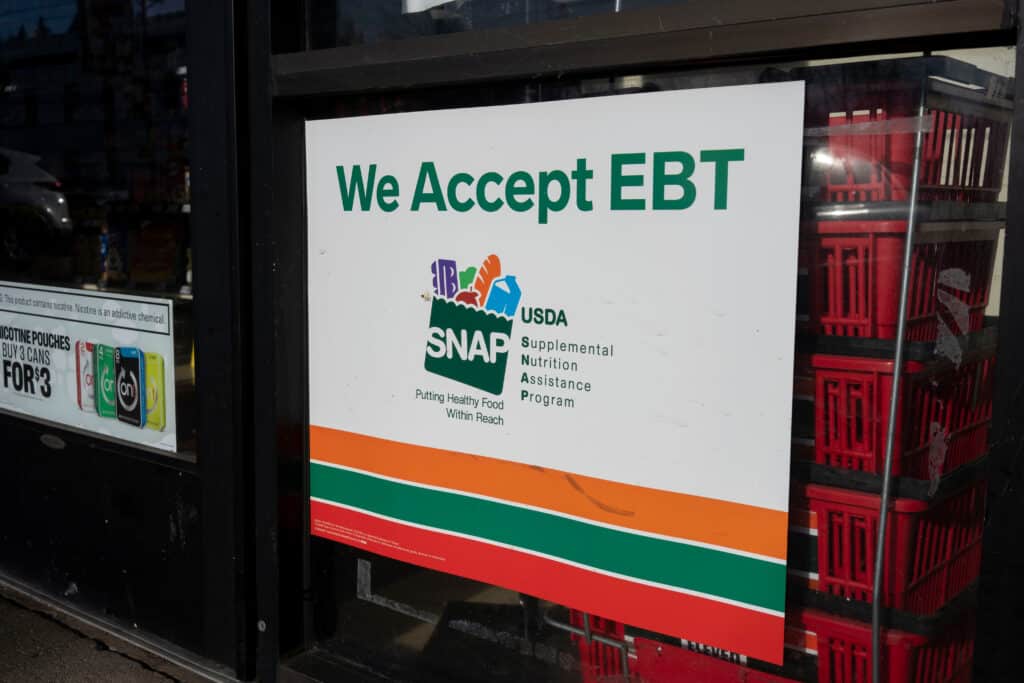
When you’re worried about where your next meal will come from, it can be difficult to focus on anything else. For women experiencing homelessness, regular access to nutritious food is often an important first step toward stability. Thirty-eight percent of N Street Village residents receive Supplemental Nutrition Assistance Program (SNAP) benefits, highlighting the program’s role in helping women meet their basic needs while they are working to rebuild their lives.
As of June 1, 2026, under new federal requirements, individuals who are considered Able-Bodied Adults Without Dependents (ABAWD) must spend at least 80 hours each month working, volunteering, attending school, or participating in job training programs to continue receiving their SNAP benefits.
Eighty hours per month is the equivalent of a part-time job. For some women, the demands of daily survival could make it difficult to consistently meet the new requirements. Many are focused on securing a safe place to sleep, managing physical and mental health conditions, or pursuing addiction recovery. This means women who are actively working to improve their circumstances could still struggle to maintain SNAP eligibility.
N Street Village Case Manager Laukisha Martin says many women are experiencing fear and anxiety about the changes. Some worry about losing a resource they rely on to meet basic needs, while others feel overwhelmed by the new requirements and the process of maintaining their benefits. Martin explained that for women with histories of trauma, the uncertainty surrounding the transition can be especially triggering and difficult to navigate.
There are exemptions that allow some to maintain their SNAP benefits and while many women at the Village may qualify, meeting the bar for exemptions is not always straightforward. Women coping with untreated mental health conditions or taking the first steps into recovery may struggle to navigate the complex administrative processes. As a result, some women may risk losing SNAP benefits even though they qualify for an exemption.
The potential impact of losing SNAP benefits extends beyond food assistance. When basic nutritional needs go unmet, it becomes harder to focus on job searches, attend appointments, and manage medical conditions.
Dominique Jones, N Street Village’s Director of Health and Wellbeing, says “Protecting access to food is not only a matter of benefits eligibility—it’s a matter of health equity, dignity, and ensuring that women have the resources they need to pursue healing, stability, and independence.”
N Street Village is taking proactive steps to help women understand the new SNAP requirements and maintain access to benefits when eligible. Staff are working with women to determine whether they qualify for an exemption based on their health, recovery status, pregnancy, or participation in qualifying education or workforce development activities.
Jones explained that the Village is also focused on strengthening collaboration across its programs. “Our Marj & Mak Vocational Center, Behavioral Health Services team, and case managers are working together to identify women who may qualify for exemptions, connect them with supportive services, and help them access programs that satisfy the new participation requirements.”
As new policy changes continue to unfold, N Street Village remains committed to understanding how these changes affect the women we serve and ensuring they have the support needed to maintain access to SNAP benefits and that we can partner with them to chart a path forward if they lose this critical resource.